CYCLE 08
Profile Story
Text by Kayla Curtis-Evans
Photography by Aaron Kirk
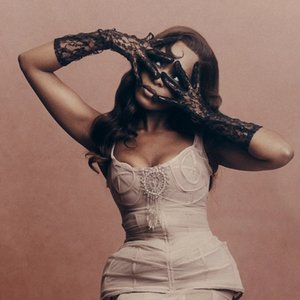
Natanya is shedding the expectations of who she should be to embrace the full force of her artistry, ambition, and self-assurance. The London hailing multi-hyphenate reflects on musical evolution, the power of vulnerability, and what it means to create on her own termswithout shrinking herself to fit anyone else’s expectations.
Text by Kayla Curtis-Evans
Photography by Aaron Kirk
When Natanya was younger, she expressed that music was all around her, so her inclination was inherent. Like her creative drive, her opinions were strong. She wasn’t a ‘know-it-all’ though. It’s just that when you know who you are, there’s simply no hiding it.
Natanya Popoola has understood her calling for her entire life. “I just always loved music and it was so attractive to me, even from a very young age,” the London-hailing crooner reflected. “I remember playing with my Fisher Price toys, trying to make loops. Anything I could get to make a sound, I'd do it. Even the sound of the washing machine — sometimes I'd hear it and think, ‘That's a song!’ So I've always had that attention to detail. But it wasn’t until I got older that I realized that this could be my livelihood too. I thought to myself, ‘If I've got something to offer, then I'm happy to take the mantle.’”
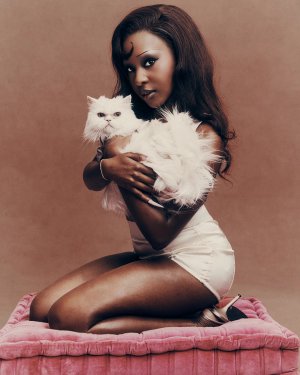
And it’s no surprise that assuming this position came naturally to the rising star, because it’s not hard to understand something that’s already pulsing through your veins. You don’t have to embody something that you are — you just have to live it. The quadruple threat musician, songwriter, producer, and instrumentalist moves through life to the beat of her own self-manufactured rhythm. Those who are tuned into the same enlightened frequency can hear the passion crescendoing from each of her effusive notes. Those who aren’t — well Natanya isn’t wholly concerned about their opinions in the first place.
The beginning of her professional musical career was merely training season. Not necessarily training to prove her musical chops — the prodigal performer has been studying classical piano since she was 4 years old. But she was preparing — both mentally and physically — to step into the role she always deserved. Past versions of Natanya felt they had something to prove, and it wasn’t long before some of her own favorite artists were singing her praises. But now Natanya is stepping into an uncharted version of herself. Perhaps it’s less that this portion of herself is uncharted and more that she’s shed all of her inhibitions now. No holds barred. No second thoughts. This is the real Natanya — in her attitude era.
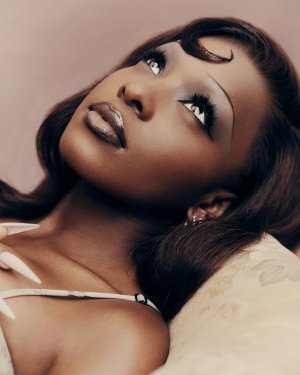
“My goal is to create a love legacy that exists beyond me.”
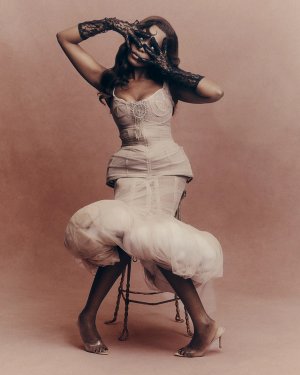
KAYLA CURTIS-EVANS: As a quadruple threat, do you feel that you channel different parts of your psyche or emotions when you're tapping into varying musical mediums?
NATANYA: I mean, it's so much in one brain. I have to figure out which version of me I want to give energy to today, and I can't all be them at the same time. But I'm really proud to know that that’s what is behind my music. And some of my icons, my legends, were like that too. It's a quality that I think is so special and should be protected in today's climate. So I'm very proud to possess all of those talents.
KCE: There are so many ways to portray your artistry as a musician these days, but someone who is truly tapping into the creative process — you don't see it too much anymore. You mentioned your ‘icons,’ some of which you’ve named, like Stevie Wonder, Michael Jackson, and Amy Winehouse. If we took a look at your playlist right now, what would we find?
NATANYA: I'm really lucky to have had a life listening to everything I possibly could. I became such a huge Paramore fan when I was 11 years old. I love the whole Odd Future thing. Syd is still one of my favorite musicians. I love Steve Lacy. I listen to a lot of Jockstrap — they're a really cool band. Sophie is a huge inspiration as well. I feel like I just love to find the thread between all music, whether it's classical or modern, and see how something that was made one-hundred years ago could have ended up being played in 2016, in the same respect. I'm a musical historian as much as I am an artist.
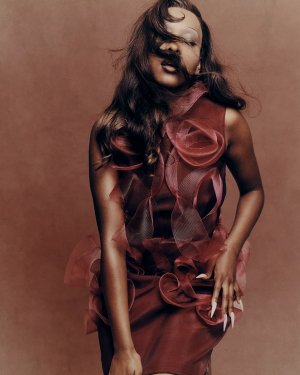
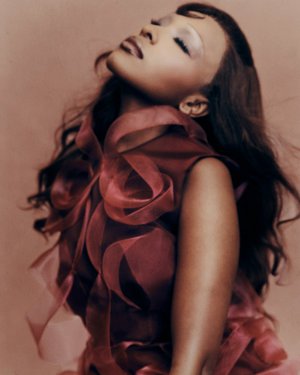
“This is something that an artist who I really look up to told me very recently. They said: ‘Don't be afraid to be magic.’”
KCE: I read in a previous interview that you said, ‘For a person who doesn't know how to use their words, a song is the best I can do.’ It's funny, because I don't think that anyone who reads your lyrics would categorize you in that way. I also read that you studied English Lit. Where do you usually pull your lyrical inspiration from?
NATANYA: Sometimes I'll read a really profound book and that will give me so much inspiration. I remember just before Feline’s Return came out, I was reading Giovanni's Room, and it’s so much to do with self-acceptance and how the lack of it can inform your approach to the world. So that project was very inspired by the idea that life can be so incredible when you see the world in a different way. So usually, my lyrics are very inspired by the literature that I consume. Sometimes it's movies that get me in a mood. Sometimes it's just about taking a break, you know, because there's so much going on every day doing this job. You don't always get time to just breathe.
KCE: I want to meditate on this idea of using writing as a tool to help compartmentalize or make sense of certain things about yourself. That’s the beauty of writing. It allows you to see things through different perspectives. Do you feel that through your musical process, you've gotten closer to that idea of self-acceptance?
NATANYA: Yes, because as you enter into the public world as an artist, it's the only way that you can communicate. I don't know what’s going on on the Internet, but I know exactly what's going on in the studio. As I get further into this, I’ve realized that is the place where you can really be who you are. I think the studio is an incredible place. The lyrics are an incredible place. The music is the place and I think I'm really excited for us to go back in that direction because that's where I always should have been.
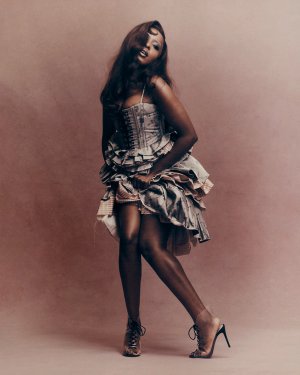
KCE: To your point, there’s a lot of spectacle and theatrics involved in the industry now. And I think that's certainly part of being a performer too. But your true artistry is what people are resonating with. It sounds like music is a place of solace for you.
NATANYA: Someone I really, hugely look up to for the way that they carry themselves is Madonna. She courted so much attention and had everyone talking about her every single second of the day, but she was someone who was equally as serious about the music that she made. She’s a producer herself and a songwriter, and she would be there to design every tour. She’s just a visionary. I feel the same way about Beyonce and all these incredible women that have paved the way. No matter what people say about them or opinions people have about how they present themselves, they can't hate on the fact that these women really care about what they’re doing. And they really stand on their art.
Sometimes your lyrics can have a cheeky or silly delivery. But they're very relatable — almost too much so. A lot of your songs are meditations on these different emotional experiences — those in the realms of love, loss, or grief. When was the last time that you fell in love and what did you learn from it?
Oh my goodness, that's a beautiful question. Honestly, ever since I really started driving this career forward, I can't remember being in love. It's consumed my life. I think it's the music that I make and the art that I make that have become my true love. But I really remember some deep relationships I had, you know, whether they were bad or not. Like my boyfriend I had just before Feline’s Return. I was always really quick to say that was a terrible relationship, but looking back, I think it opened up a lot of parts of me that were so incredibly innocent. It just made me feel free to love out loud and you can hear it on some of the songs on the album, like, “Ur Fool,” for example.
KCE: I think your answer was equally as beautiful. Sometimes when you come out of something and it doesn't end or turn out the way that you wanted, it's really easy to think about the entire thing as a negative experience. I feel like being able to write and process those things through a song is probably one of the most powerful ways to become aware of the double-edged nature of those scenarios.
NATANYA: Absolutely. I completely agree with you. And even situationships I've had — I think Gen Z is so quick to slam down any form of vulnerability. And it's not nice to be in a position where any love is unrequited, but again, it opened up parts of me that I would never like to see go away. My readiness to love, my openness — and I wrote about so many of those on Sorrow at Sunrise as well. Those are qualities that I'd love to see back in me again, as I advance in this career more and more, because my goal is not just to be one of the most successful artists of this generation and rule the world [laughs], but also to create a love legacy that exists beyond me — to be in love with someone, to inspire some kids of my own. So that's also part of it too.
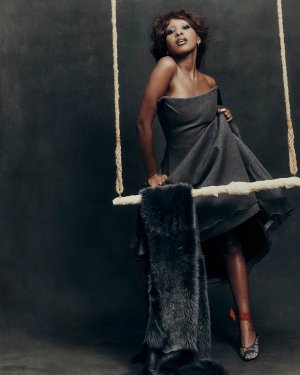
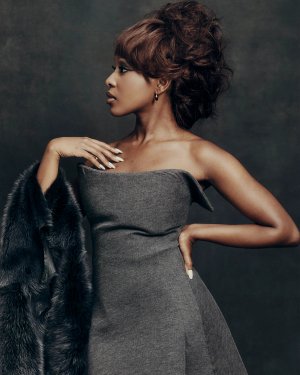
“I really want to stretch my limbs out and express the magic that I feel exists within me.”
KCE: You mentioned Feline’s Return and some of your past projects. And now you have an upcoming project and new era ahead. Do you feel that you channeled a different part of yourself while bringing Attitude Era to life? Does it depart at all from past albums?
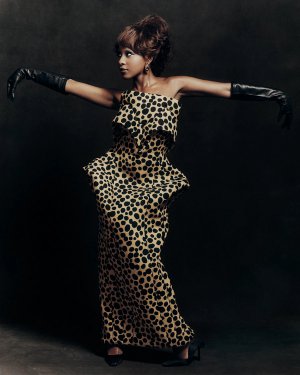
NATANYA: Well, a lot of my lyrics at this point have been so overtly autobiographical. My music has been so good at capturing the awkwardness of growing up. But I feel like I got to a very specific point when I was creating Attitude Era where I said, ‘Okay, there is a specific type of artist that people really, really want me to be.’ They really want me to sit in a box. Even if I get to be genre-less, even if I get to be whimsical and all these incredible things. There is this specific box that people want me to sit in. And that is a box of humility. A box of self-deprecation. And I don't want to live there anymore. I really want to stretch my limbs out and express the magic that I feel exists within me. And when you're making those strides, it's gonna have a lot of charge because people are not used to seeing somebody that looks like me going out there and asserting herself the way that I do.
But once you do it, it is so inspiring to people who are watching you from the sidelines. And I felt that way looking at some of my icons as I was growing up. And I felt like it was time for me to do that because this is a story that exists beyond just me. So in a lot of the songs in Attitude Era, it's not really me saying, ‘Oh, this guy broke up with me and I'm so sad,’ anymore. I’m not trying to get people to relate to me in that way. Instead I thought, ‘What do I have to say about the next 10 years of my career? What do I have to comment on about where I live right now and how that feels?’ Not because it makes me sad that I live where I live and I'm not a millionaire yet. But the hustle, and how excited I am to hustle my way through this stage of my life and arrive at the other side. There's tough stuff in the world, but how do we work past it and move forward and make a good day out of something bad?
KCE: I spoke about this recently with an artist — the pressure that a lot of creatives feel. There's this belief that to create something good, there has to be some sort of suffering. I feel like you're in that moment when you finally realize, ‘I can still make beautiful things, and they will be meaningful to people and I don't have to only dip into this sad side of myself.’
NATANYA: I feel like I always align these projects with my life and at this specific point in my life right now, I've gotten to the stage where I want to project power. I'm not in the same stage that I was at the beginning of Feline’s Return, where I was in the pub every weekend, meeting guys, and having these crazy rendezvous. Kind of just being a teenager. But I'm learning how to be a woman now, and that's very different. And I'm a very young woman, but I'm learning really important lessons for the rest of my 20s. IIt's kind of like my Sex and the City era [laughs].
KCE: So you feel that Attitude Era is a more grown-up version of you?
NATANYA: One-hundred percent. I was a really shy child and I've spent a lot of my time in my life being a people pleaser. I wrote a song during that time in my life, called “Jezebel,” It’s kind of like a goodbye to that version of myself. And it's really about me letting go of that and starting to understand, ‘Okay, you're going to be here for a long time on this earth. You’ve gotta figure out how it is you want to be here and on what terms.’
KCE: You mentioned your upbringing, and I wanted to ask about that too because you were around so many different cultural influences. Your dad grew up in London and he’s Nigerian, and your mom is Trinidadian-Indian. How do you feel that those different touchpoints find their way into your sound and this new project?
NATANYA: Honestly, I think they've just been a part of my branding from the very start. People are always so confused about where I'm from. I don't feel like I ‘belong’ to any specific place, and that's because I've been so lucky to have been raised by a Nigerian father and, as you said, an Indian-Trinadian mother — people who have connections to so many different points in the world. I’m grateful for that.
KCE: We discussed evolution — not just sonically — but this personal evolution that you’re very much able to track through your projects. If you could go back and tell your SoundCloud mix or Blue Jay-era self a bit of advice, what would you say?
NATANYA: I would tell us to do nothing different. Just enjoy. Music was so pure then and coming from such an innocent place for me. And I'm just so proud of that person that, when there was no external validation, she just made things because they amused her. I love that curiosity that I have. And I would just tell myself to maintain that, sustain it, and never lose it.
KCE: You've also mentioned an animated cat alter ego that you channel, and your fans are called ‘felines.’ I feel like there's a pretty logical answer to this question, but do you think of yourself as more of a black cat or a golden retriever, personality-wise?
NATANYA: Black cat 100%. They're so misunderstood. They're so beautiful. People have put so many random allegations on these little cats, but from my perspective, I love the cunningness that they've had assigned to them.
KCE: What are you most excited about for people to hear Attitude Era, whether it's this shift in, thematically, what you're focusing on in the lyrics or other production elements?
NATANYA: It is the best project I've ever made that's executively produced by me, so that's the fun. Oscar Scheller was the most incredible co-producer. We worked together on this, and he was an integral part of the whole process as much as I was. The next thing is — and this is something that an artist who I really look up to told me very recently. They said: ‘Don't be afraid to be magic. People haven't seen someone like you before, and that's okay. Own it.’ Sometimes, people try to encourage, like I said, artists like me to assume a humility that we just don't need to have. This project is me just saying, ‘Guys, I'm gonna put the evidence on the table. I made this with my hands. I produced this. I wrote it. This is what it sounds like. Listen to it, tell me what you think.’ I can't wait to put that statement out there because, being a girl, looking the way I look, people can always underestimate those things about you. I think there's just an incredible power that music has to really make its own narrative. So I'm excited for that.
KCE: How does it feel that you've been deemed by many as ‘your artist's favorite artist’? What did it feel like to get recognition from some of the people that informed your work?
NATANYA: It was incredible. I really do work hard, but I compare myself to a badger working underground. I don't even notice what's going on above my head sometimes. So when you stop for a second and realize, ‘Wow, 10 years ago, you would die if this person even breathed in your direction,’ it;s crazy. I was so honored to receive those kind words. But I've always said, as much as I love being my favorite artists’ favorite artist, I really cannot wait to inspire some kids of my own. But I love it. And it’s a testament to how far intention can get you, because even when I was a teenager, I was very specific about who I stanned.
I was very black and white in my mindset, and I would always say at school, ‘Guys, there are only like five people that make good music.’ Everyone used to kind of say that I was a know-it-all. So for those specific people to tell me how they feel about my music is incredible and I don't even know how that happened. The albums that I used to stick up on my wall…to have them translated into real-life DMs from people is crazy.
KCE: In the same way that you've been uplifted by others to create, who do you hope to inspire with your music?
I genuinely want to create that feeling of inspiration in girls. People in general, but girls that look up to me now. I want them to feel, ‘When I go out into the world, I am allowed to be confident, I'm allowed to stand up for myself. I'm allowed to feel emboldened by the education that I have, the talents that I have. And I'm allowed to succeed.’
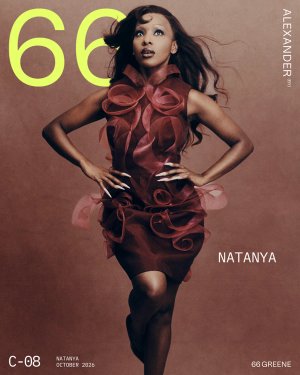
Photographer: @aarondanielkirk
Photo Assistant: @chromanodyssey
Stylist: @dionemdavis
Makeup: @molliegloss
Hair: @um_takayuki
Production Assistant: @dvidmattos @bellevoss_ @yourfriendclaudine
Art Director: @dauduhh
Studio Director: @snatraraps
Production Coordinator: @treboutilier
Producer: @weaponsformedagainstme
Head of Production: @evanmcc_
Managing Director: @jameslennonchuang
Executive Creative Director: @yohbe_
Publisher: @_by.alexander